Swimming, boating, and spending time near water can be enjoyable parts of family life, but water also presents serious risks that can develop quickly. Drowning often happens silently, and a dangerous situation may occur within moments. That is why drowning prevention for families should rely on several layers of protection rather than a single safety measure.
The Centers for Disease Control and Prevention identifies drowning as the leading cause of death among U.S. children ages 1 to 4. The American Academy of Pediatrics also emphasizes that no single prevention strategy is enough. Instead, families should combine supervision, barriers, swimming skills, life jackets, emergency preparedness, and awareness of water conditions.
These precautions apply not only to swimming pools but also to bathtubs, lakes, rivers, beaches, ponds, spas, buckets, and other places where water is present.
 Why Drowning Prevention Requires Multiple Layers
Drowning risks vary depending on a person’s age, swimming ability, environment, health, and activity. Young children may gain unexpected access to a backyard pool, while teenagers may encounter stronger currents or deeper water during recreational activities.
The American Academy of Pediatrics updated its drowning-prevention recommendations in 2026 and continues to stress a layered approach. Close supervision can help prevent emergencies while children are in the water, but barriers are also needed to prevent unsupervised access when adults do not expect children to be near water.
Swimming lessons, life jackets, lifeguards, and CPR training provide additional protection when used alongside those measures.
Water Risks Change as Children Grow
Toddlers face particularly high drowning risks around swimming pools and other accessible water. Older children and teenagers may encounter different hazards, including natural water, boating, strong currents, deep water, and risky behavior.
Parents should adjust safety rules as children become more independent rather than assuming that an older child who can swim no longer needs supervision or other precautions.
Supervision Is the First Layer of Protection
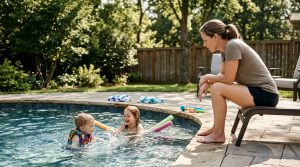
Children should be closely and actively supervised whenever they are in or around water. Effective supervision means more than simply being somewhere nearby.
The supervising adult should be able to see the child, remain attentive, and respond immediately if something goes wrong. Phones, conversations, reading, household chores, and alcohol can interfere with effective supervision.
Stay Within Reach of Young or Weak Swimmers
For toddlers, inexperienced swimmers, and children who need extra assistance, an adult should remain close enough to provide immediate help. The American Academy of Pediatrics recommends close, constant, attentive, and capable supervision around water.
Parents should not rely on older siblings to supervise younger children in pools, bathtubs, or other water environments.
Assign a Specific Water Watcher
At parties or family gatherings, adults may assume someone else is watching the children. Assigning one responsible adult to actively monitor swimmers can reduce confusion.
If adults take turns supervising, responsibility should be clearly transferred rather than assumed.
Use Four-Sided Pool Fencing
Residential pools can remain hazardous even when no one is actively swimming. Young children may leave a house unnoticed and reach a pool within a short period of time.
The U.S. Consumer Product Safety Commission and the American Academy of Pediatrics recommend barriers that separate a pool from the house and surrounding yard.
Choose a Self-Closing and Self-Latching Gate
A four-sided fence should completely isolate the pool area rather than using the house as one side of the barrier. Gates should close and latch automatically and remain difficult for young children to open.
Families should inspect pool gates and fencing regularly. A gate that no longer closes correctly, damaged fencing, or objects positioned near the barrier can undermine its effectiveness.
Do Not Leave Climbable Objects Near the Fence
Furniture, toys, planters, and other objects placed beside a pool barrier may allow a child to climb over it. Keep surrounding areas clear and regularly check whether landscaping or outdoor furniture creates new access points.
Swimming Lessons Can Build Water Competency
Learning how to swim is an important component of drowning prevention. Formal swimming instruction can help children develop skills such as entering the water safely, resurfacing, turning around, floating, moving through the water, and reaching an exit.
The CDC notes that formal swimming lessons can reduce drowning risk among children and young adults. However, swimming ability should never be treated as a substitute for supervision.
Swimming Skills Do Not Make Anyone Drown-Proof
Even experienced swimmers can encounter exhaustion, medical emergencies, unexpected currents, cold water, injuries, or panic. Children may also overestimate their abilities when playing with friends or entering unfamiliar water.
Families should continue using other safety measures even after children become confident swimmers.
Use Properly Fitted Life Jackets
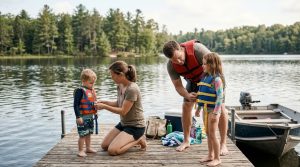
Life jackets provide an important additional layer of protection during boating and many other water activities. Families should choose a properly fitted life jacket designed for the wearer’s weight and activity.
The U.S. Coast Guard provides information about selecting and wearing life jackets for recreational boating.
Inflatable Toys Are Not Life Jackets
Pool noodles, inflatable rings, water wings, air mattresses, and similar recreational products should not be treated as substitutes for approved personal flotation devices.
Inflatable toys may deflate, move away from a swimmer, or give children a false sense of security.
Learn CPR and Basic Water Rescue Skills
When drowning occurs, rapid response can make an important difference. Parents, grandparents, babysitters, coaches, and other adults who regularly supervise children around water may benefit from CPR and basic rescue training.
The American Academy of Pediatrics recommends CPR and safe rescue training as part of a broader drowning-prevention strategy.
Call for Emergency Help Immediately
If someone is unresponsive or experiencing a serious water emergency, call emergency services and begin appropriate lifesaving measures as soon as possible.
Formal CPR courses can help adults practice the skills needed to respond more confidently during an emergency.
Make Bathtub Safety a Priority
Drowning prevention is not limited to swimming pools. Bathtubs can present serious risks to babies and young children.
Never leave a young child alone in a bathtub, even briefly. An adult should remain close and attentive throughout the bath.
Do Not Rely on Bath Seats for Supervision
Bath seats and other bathing products do not replace adult supervision. A child may slip, tip over, or become trapped unexpectedly.
Parents should gather towels, soap, clothing, and other needed supplies before beginning the bath so they do not need to leave the room.
Empty Small Water Containers After Use
Young children can be at risk around relatively small amounts of water. Buckets, portable pools, coolers, tubs, and other containers should be emptied immediately after use.
The AAP recommends emptying buckets and storing them upside down when they are no longer needed.
Check the Home for Unexpected Water Hazards
 Families with toddlers should consider whether fountains, ponds, toilets, water features, or containers could become accessible without an adult noticing.
Home safety works best when hazards are addressed before an emergency occurs. Readers can also review our fall prevention at home guide for additional ways to identify everyday household risks.
Natural water presents hazards that may not be obvious from shore. Currents, waves, sudden drop-offs, submerged objects, changing weather, cold water, and limited visibility can make swimming more difficult than it appears.
Whenever possible, families should swim at designated areas with trained lifeguards and follow posted warnings.
Check Conditions Before Entering the Water
At beaches, pay attention to warning flags, rip-current information, weather forecasts, and lifeguard instructions. At lakes and rivers, consider current strength, water temperature, visibility, boating activity, and underwater hazards.
Avoid Unfamiliar Water at Night
Low visibility can make it much more difficult to recognize drop-offs, currents, rocks, boat traffic, or a swimmer in distress. Families should choose well-supervised and clearly designated swimming areas whenever possible.
Teach Teenagers About Water Risk
Teenagers may have strong swimming skills but can still face serious drowning risks. Adolescents sometimes overestimate their abilities or take risks around natural water, boats, cliffs, or strong currents.
Parents should discuss water safety directly, including the dangers of swimming alone, diving into unfamiliar water, risky stunts, and combining alcohol or drugs with swimming or boating.
Use a Buddy System
No one should depend entirely on a buddy for rescue, but swimming with another person can provide an additional layer of awareness and assistance.
Teenagers should know that a confident swimmer can still become exhausted, injured, disoriented, or overwhelmed by changing conditions.
Watch for Heat During Long Days Near Water
Pool and beach days often involve extended sun and heat exposure. Families should remember that drowning prevention and heat safety can overlap, especially when children become tired or dehydrated.
Provide drinking water, shade, breaks, and appropriate sun protection. For more guidance, read our article on how to prevent heat-related illness during extreme summer weather.
Know What Drowning Can Look Like
Drowning does not always involve loud shouting, splashing, or obvious calls for help. A person in trouble may be unable to speak or may appear unusually quiet while struggling to keep their mouth above water.
Adults supervising swimmers should watch the water continuously rather than waiting for someone to call for help.
Take Any Water Emergency Seriously
Anyone who experiences breathing difficulty, loss of consciousness, persistent coughing, confusion, unusual sleepiness, or other concerning symptoms after a water incident should receive appropriate medical evaluation.
Families should avoid outdated terms such as “dry drowning” or “secondary drowning.” Current medical guidance describes drowning as a process involving respiratory impairment from submersion or immersion in liquid.
Create a Family Water Safety Plan
The strongest drowning-prevention strategy combines several simple habits. Families can review water rules before swimming, identify who is supervising, check barriers and gates, carry life jackets when needed, and know how to contact emergency services.
When visiting another home, vacation rental, hotel, or recreational area, parents should also inspect the environment rather than assuming that appropriate safety barriers are already in place.
Review Safety Rules Regularly
Children grow, swimming skills change, and families may visit different types of water throughout the year. Reviewing safety expectations before pool season, vacations, boating trips, or beach outings can help everyone understand their responsibilities.
Make Water Safety a Routine, Not a Reaction
Drowning prevention does not depend on one device, one swimming lesson, or one careful adult. The most effective approach uses multiple layers of protection: active supervision, four-sided pool fencing, swimming competency, properly fitted life jackets, safer natural-water practices, CPR knowledge, and early emergency response.
These precautions can become simple family habits over time. By preparing before children enter the water, families can focus more confidently on enjoying swimming and recreation while reducing avoidable risks.
For more practical safety guidance, visit the Injuries Prevention blog or explore the Safety Resources section.