
Pickleball has become one of the most popular recreational sports in the United States, attracting beginners, longtime athletes, and older adults looking for an enjoyable way to stay active. The smaller court and slower-moving ball can make the game seem relatively gentle, but pickleball still requires rapid starts, stops, lunges, pivots, overhead movements, and repeated swings.
Those movements can place considerable stress on the ankles, knees, shoulders, elbows, wrists, and lower legs. Recent research has documented increasing numbers of pickleball-related injuries as participation grows, making pickleball injury prevention increasingly important for both new and experienced players.
A 2026 review published in Orthopaedic Nursing identified falls, wrist fractures, rotator cuff injuries, ankle sprains, and heat-related illness among important injury concerns. Fortunately, many common risks can be reduced with sensible preparation, proper footwear, conditioning, rest, and safer playing habits.
Why Pickleball Injuries Happen
Pickleball requires players to change direction repeatedly within a relatively small area. A player may move forward for a short ball, stop quickly, shuffle sideways, reach overhead, and then retreat toward the baseline within a matter of seconds.
These movements can be especially demanding for people who are returning to sports after a long period of inactivity. Muscles, tendons, joints, and balance systems may not immediately be prepared for frequent explosive movement.
A 2026 systematic review available through the National Library of Medicine found that sprains, strains, and fractures were among the most frequently reported lower-extremity pickleball injuries. Falls and rapid movements such as lunging were important injury mechanisms.
Common Pickleball Injuries
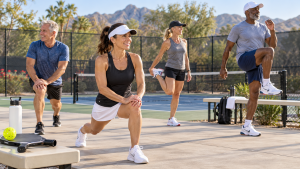 Players may experience both sudden injuries and problems that develop gradually from repetitive use. Common areas affected include:
- Ankles and feet
- Knees
- Achilles tendon
- Hamstrings and calves
- Shoulders
- Elbows
- Wrists and hands
- Lower back
Falls may also lead to fractures, particularly when a player reaches out with a hand while trying to break the fall.
Warm Up Before Playing
Going directly from sitting in a car or walking into a recreation center to fast-paced play can place unnecessary stress on cold muscles and joints. A short warm-up helps prepare the body for the movements required during a match.
The American Medical Association recommends dynamic movement before play and notes that strains and joint pain can occur when players increase activity too quickly.
Use Dynamic Movement Before the Match
A useful warm-up might include several minutes of walking followed by controlled movements such as leg swings, arm circles, gentle lunges, side steps, calf raises, and easy practice swings.
The goal is not to exhaust the body before playing. Instead, gradually increase circulation and prepare muscles and joints for faster movement.
Start With Easy Rallying
After warming up, spend a few minutes hitting the ball at a comfortable pace. Gradually increase the intensity rather than beginning immediately with powerful serves or aggressive sprints.
Wear Shoes Designed for Court Movement
Running shoes are designed primarily for forward motion. Pickleball, however, involves substantial side-to-side movement and frequent changes in direction.
Supportive court shoes designed for sports such as pickleball or tennis typically provide better lateral stability. Appropriate footwear may help reduce unnecessary foot movement inside the shoe and provide traction for quick stops and directional changes.
The American Academy of Orthopaedic Surgeons recommends appropriate court footwear as part of pickleball injury prevention.
Replace Shoes When They Become Worn
Even good court shoes lose support and traction over time. Check the soles regularly for worn tread, uneven wear, damaged material, or loss of cushioning.
A shoe that feels unstable or slides unexpectedly on the court may increase the likelihood of losing balance.
Increase Playing Time Gradually
One of the easiest mistakes for new players is doing too much too quickly. Because pickleball is social and enjoyable, players may participate for several hours without realizing how much repetitive stress they are placing on muscles and tendons.
Research involving pickleball players has associated more frequent play and less playing experience with increased injury risk. A nationwide study of 1,758 participants found that injuries were common and that playing frequency was one factor associated with injury risk. The study is available through the National Library of Medicine.
Give the Body Time to Adapt
Beginners may benefit from shorter sessions separated by recovery days. Playing several long matches on consecutive days can increase stress on the knees, shoulders, elbows, and lower legs.
Gradually extending playing time allows the body to adapt to the demands of the sport.
Protect the Achilles Tendon and Ankles
Quick acceleration toward the net can put substantial force through the calf and Achilles tendon. Sudden stopping, pivoting, or stepping on another player’s foot may also contribute to ankle injuries.
The McGovern Medical School has identified ankle sprains and Achilles tendon ruptures as notable pickleball injuries, particularly among adults returning to recreational sports.
Strengthen the Lower Legs
Exercises such as controlled calf raises can help strengthen the muscles supporting the ankle and lower leg. Balance exercises may also improve the ability to react when a player becomes unstable.
Anyone with existing Achilles tendon pain should avoid trying to play through worsening symptoms.
Protect Your Knees During Direction Changes
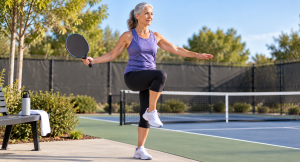 Pickleball involves frequent bending, lunging, stopping, and side-to-side movement. These actions can place repetitive stress on the knees.
Players should avoid excessively long lunges when they can reach the ball using several shorter steps instead. Maintaining control is generally safer than stretching far beyond a comfortable range simply to reach one shot.
Use Smaller, Controlled Steps
Quick shuffle steps can help players maintain balance while moving laterally. Crossing the feet during fast side-to-side movement may make recovering balance more difficult for some recreational players.
Strengthening the hips, thighs, and gluteal muscles away from the court can also support better knee control.
Build Strength and Balance Away From the Court
Playing pickleball alone may not provide all the conditioning needed to prevent injuries. Strength and balance exercises can improve the body’s ability to handle fast movement.
Useful exercises may include squats, step-ups, calf raises, resistance-band exercises, controlled lunges, and balance drills appropriate for the individual’s fitness level.
Balance Training May Help Reduce Falls
Falls are an important source of pickleball injuries. Practicing balance can help players respond more effectively when reaching, turning, or moving backward.
For additional fall-prevention guidance, readers can explore our article on how to prevent falls at home. Although home hazards differ from sports risks, strength, balance, awareness, and safe movement are important in both settings.
Use Proper Technique for Repetitive Shots
Shoulder and elbow pain can develop when players repeatedly use poor mechanics, particularly during serves, overhead shots, and forceful backhands.
An experienced instructor can help new players learn efficient movement and swing mechanics. Proper technique may reduce unnecessary stress while also improving performance.
Avoid Hitting Every Shot at Maximum Force
Pickleball often rewards control and placement more than pure power. Repeatedly swinging as hard as possible can place additional stress on the shoulder, elbow, wrist, and forearm.
Players experiencing persistent elbow or shoulder soreness should reduce activity rather than repeatedly pushing through pain.
Stay Hydrated During Outdoor Play
Outdoor pickleball can become physically demanding during warm or humid weather. Dehydration and overheating may reduce concentration, reaction time, and physical performance.
Drink water before becoming very thirsty and take regular breaks during extended sessions. During very hot conditions, players may need to shorten matches or move activity to cooler parts of the day.
For more information about hot-weather activity, read our guide on how to prevent heat-related illness during extreme weather.
Watch for Signs of Heat Illness
Symptoms such as dizziness, weakness, headache, nausea, confusion, unusual fatigue, or heavy sweating should not be ignored. Stop playing, move to a cooler location, and seek appropriate medical help when symptoms are severe or worsening.
Inspect the Court Before Playing
Court conditions can contribute to falls. Before starting a match, look for water, leaves, debris, cracks, loose equipment, balls from nearby courts, and other potential hazards.
Players should also avoid leaving bags, water bottles, or clothing near areas where someone might run during play.
Be Careful When Moving Backward
Running backward to chase a lob can increase the risk of losing balance. Whenever possible, turn and move using controlled steps rather than rapidly backpedaling while looking overhead.
Players should also communicate clearly during doubles matches to reduce the risk of collisions.
Do Not Ignore Persistent Pain
Some sports injuries happen suddenly, while others begin with mild discomfort that gradually becomes worse. Persistent soreness, swelling, weakness, limited movement, or recurring pain can be signs that the body needs rest or evaluation.
Continuing to play through pain may turn a relatively minor overuse problem into an injury requiring a longer recovery period.
Know When to Seek Medical Care
Prompt medical evaluation may be appropriate after a severe fall, suspected fracture, inability to bear weight, major joint swelling, visible deformity, sudden Achilles pain, significant weakness, or another serious symptom.
Make Pickleball Injury Prevention Part of Every Match
Pickleball offers exercise, competition, and social connection, but safe participation requires more than simply picking up a paddle. Warming up, using court-specific footwear, improving strength and balance, increasing playing time gradually, staying hydrated, inspecting the court, and responding appropriately to pain can all reduce avoidable risks.
Players do not need to eliminate every possibility of injury to enjoy the sport safely. Instead, the goal is to recognize predictable risks and develop habits that make injuries less likely.
For additional practical guidance, visit the Injuries Prevention blog and explore our safety resources for more strategies to help prevent everyday injuries.