
A fall can happen in seconds, even in a familiar home. A loose rug, dark hallway, wet bathroom floor, poorly placed electrical cord, or missing stair handrail may be enough to cause someone to lose balance. Although older adults face a particularly high risk of serious fall injuries, children, working-age adults, visitors, and people recovering from illness or surgery can also be injured by household falls.
Effective fall prevention at home does not always require major remodeling. Many risks can be reduced by clearing walking paths, improving lighting, securing floor coverings, adding stable support features, and changing a few everyday habits. A room-by-room inspection makes it easier to identify hazards that people may overlook because they see them every day.
Why Fall Prevention at Home Matters
 Falls can cause fractures, head injuries, cuts, sprains, and loss of mobility. For an older adult, even a fall without a major injury may create anxiety about walking or completing ordinary activities. That fear can lead to reduced movement, weaker muscles, and an increased likelihood of another fall.
The Centers for Disease Control and Prevention identifies falls as the leading cause of injury among adults age 65 and older. However, falls are not an unavoidable part of aging. Environmental changes, appropriate exercise, medical reviews, and safer daily routines can reduce risk.
Begin by walking through the home during both daytime and nighttime. Look at each space from the perspective of someone with reduced vision, limited mobility, poor balance, or an urgent need to reach the bathroom. Add any problem you notice to a written home-safety checklist.
Fall-Proof the Living Room and Hallways
Living rooms and hallways often contain furniture, rugs, decorative objects, pet supplies, charging cables, and other items that narrow walking paths. Arrange furniture so that people can move through the room without turning sideways or stepping around obstacles. Avoid using small tables, unstable chairs, or lightweight furniture as walking supports because they may slide or tip.
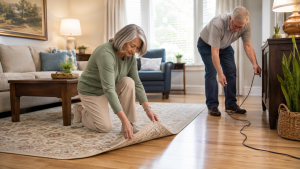
Remove clutter from floors and keep newspapers, toys, shoes, bags, and pet items away from regular routes. Electrical and charging cords should run along walls rather than across walkways. If a cord must cross an area temporarily, relocate the device instead of covering the cord with a rug.
Secure Rugs and Floor Coverings
Loose rugs can slide, curl at the edges, or catch a person’s foot. Remove unnecessary throw rugs, especially in high-traffic areas. Rugs that remain should lie flat and have effective nonslip backing. Replace torn carpet, raised transitions, loose floorboards, and damaged tiles promptly.
The National Institute on Aging’s room-by-room guidance recommends keeping cords near walls, securing rugs, arranging furniture to create clear paths, and ensuring that rooms have adequate lighting.
Improve Lighting Along Every Route
Place lamps where they can be switched on before entering a dark area. Replace burned-out bulbs promptly and use the highest safe bulb wattage recommended for each fixture. Night-lights can improve visibility between bedrooms and bathrooms, while motion-activated lighting may help in hallways, closets, and entry areas.
Reduce glare where possible. Bright light reflecting from polished flooring can make changes in floor level harder to see. Window coverings can control strong sunlight, and contrasting colors can make furniture edges, steps, and doorways easier to distinguish.
Make the Bathroom Safer
Bathrooms combine water, smooth surfaces, limited space, and movements that require balance. These conditions make them one of the most important areas in a home fall-prevention plan.
Use slip-resistant flooring or a properly secured nonslip mat. Clean up water immediately and address leaking toilets, sinks, and shower doors. Avoid loose towels or bathmats that can move underfoot.
Install Properly Anchored Grab Bars
Install grab bars beside the toilet and inside or immediately outside the tub or shower. Grab bars must be attached securely to suitable wall supports. Towel racks and soap dishes are not designed to support a person’s weight and should never be used as substitutes.
A shower chair or transfer bench may help a person who becomes tired or unsteady while bathing. A handheld showerhead can make seated bathing easier. Depending on individual needs, a raised toilet seat or toilet safety frame may provide additional support.
Keep Frequently Used Items Within Reach
Place soap, shampoo, towels, and other supplies where they can be reached without bending deeply, twisting, or standing on tiptoe. Avoid reaching outside the shower for a towel while standing on a wet surface.
The Consumer Product Safety Commission’s safety checklist recommends slip-resistant bathroom surfaces and grab bars as important measures for reducing falls.
Improve Stair and Entryway Safety
Keep every stair free of packages, shoes, laundry, books, and decorative objects. Repair loose boards, worn carpet, uneven steps, and broken edges. Indoor and outdoor stairs should have reliable lighting that illuminates the entire flight without creating heavy shadows.
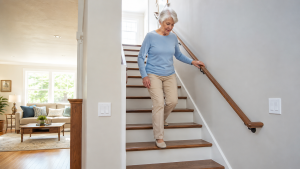
Install secure handrails that extend along the stairs. Where practical, rails on both sides allow a person to use the stronger hand and provide support in either direction. Make sure railings are easy to grip and do not loosen when pressure is applied.
Contrasting tape or paint along the front edge of each step may help people with reduced vision recognize changes in height. Avoid patterned carpeting that makes stair edges difficult to distinguish.
Protect Exterior Entrances
Repair cracked walkways, uneven paving stones, loose porch boards, and unstable steps. Keep entrances free of leaves, water, moss, ice, hoses, tools, and packages. Use outdoor lighting that clearly shows the path from the driveway or sidewalk to the door.
Choose a doormat with a nonslip backing and a low profile. A thick or curled mat can become a tripping hazard. Provide a stable place to set down bags so that people do not need to unlock the door while carrying items that obstruct their view.
Reduce Bedroom Fall Hazards
Create a clear path between the bed, doorway, closet, and bathroom. Keep a lamp, phone, glasses, and other essential items within easy reach of the bed. A person should not need to walk through a dark room to turn on the main light.
The bed should be at a height that allows the person to sit with both feet touching the floor. A bed that is too high or too low may make standing more difficult. Avoid unstable bedside tables and rolling furniture that could move if used for support.
Keep blankets, clothing, shoes, and charging cords off the floor. Pets that sleep near the bed can also create an unexpected obstacle, so consider providing a designated pet bed outside the main walking path.
Organize the Kitchen and Dining Area
Store frequently used cookware, dishes, and food between waist and shoulder height. This reduces the need to stretch, bend, or climb. Heavy items should not be stored on high shelves where they could affect balance while being removed.
When an item cannot be reached safely, use a stable step stool with a handrail. Never stand on a chair, countertop, box, or folding table. Ask another person for assistance when an object is heavy or stored in an awkward location.
Wipe up spills immediately and keep cabinet doors and drawers closed. Replace loose floor mats and repair damaged flooring. Dining chairs should be stable and positioned so they do not obstruct the route between the kitchen, table, and other rooms.
Address Personal Factors That Increase Fall Risk
A safer home is only one part of fall prevention. Vision changes, hearing problems, muscle weakness, foot pain, dehydration, dizziness, and some medications can affect stability. Anyone who has fallen, feels unsteady, or worries about falling should discuss those concerns with a qualified healthcare professional.
Review Medications and Health Changes
Some prescription and over-the-counter medicines may cause sleepiness, dizziness, confusion, or changes in blood pressure. Do not stop taking medication without medical advice. Ask a healthcare professional or pharmacist to review medications and explain possible side effects or interactions.
Stand up slowly after sitting or lying down. Pause before walking if dizziness occurs. Regular vision and hearing examinations can also identify changes that make it harder to detect obstacles or understand the surrounding environment.
Build Strength and Balance Safely
 Appropriate physical activity can support leg strength, coordination, flexibility, and balance. Walking, tai chi, and professionally recommended balance exercises may be useful, depending on the person’s health and abilities. Someone with medical conditions, recent surgery, or a history of falls should seek professional guidance before beginning a new exercise program.
A cane or walker may provide stability when it is correctly fitted and used. Improperly sized mobility equipment can create new hazards. A physical or occupational therapist can assess mobility and recommend safer techniques or home modifications.
Prepare in Case a Fall Happens
Prevention reduces risk but cannot guarantee that a fall will never occur. Keep a phone or alert device accessible, especially for someone who lives alone. Save emergency contacts and consider a regular check-in arrangement with a relative, neighbor, or caregiver.
If a fall occurs, do not rush to stand. Check for severe pain, bleeding, dizziness, or an inability to move a limb. Call emergency services when a serious injury may have occurred. Falls involving a head impact require particular attention, especially when the person takes blood-thinning medication or develops confusion, vomiting, increasing drowsiness, or a severe headache.
More guidance for identifying and reducing everyday household hazards is available through the website’s Safety Resources. Readers can also explore additional prevention topics in the Injuries Prevention blog, including guidance on lithium-ion battery fire safety.
Create a Monthly Home Fall-Safety Routine
Inspect the home regularly because conditions change. Bulbs burn out, rugs shift, cords are added, furniture is moved, and outdoor surfaces deteriorate. A brief monthly walkthrough can identify these problems before they contribute to an injury.
Start with the areas used most often and the routes traveled at night. Clear walkways, test handrails, inspect bathroom supports, replace failed lighting, and ask household members whether they have noticed any new difficulty moving through the home.
Final Thoughts
Fall prevention at home is most effective when environmental improvements and personal health needs are addressed together. Clear floors, reliable lighting, secure handrails, bathroom grab bars, sensible storage, appropriate footwear, and attention to balance or medication concerns can make everyday movement safer.
Small changes completed room by room can protect mobility, confidence, and independence. Rather than waiting for a fall to expose a hazard, families can make safety inspections part of ordinary home maintenance and respond promptly whenever someone begins feeling unsteady.